
Inca Trail ruins
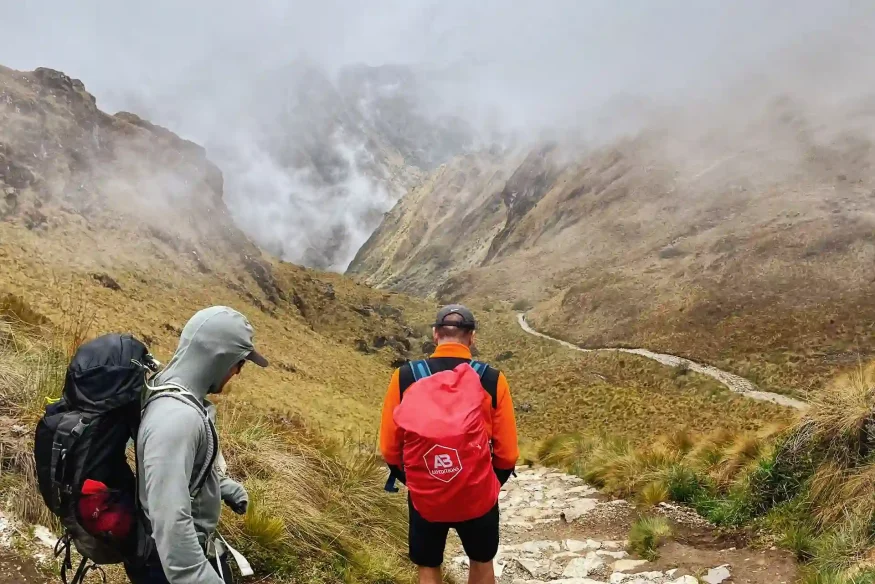
The Inca Trail is an ancient hiking route in Peru that leads to the famous Inca citadel of Machu Picchu. Along the way, hikers will encounter numerous ruins and archaeological sites that provide insight into the fascinating history and culture of the Inca Empire. Here are 11 incredible Inca Trail ruins that you will see along the way, but it is important to specify one important point: the camps. In order to distinguish them we will name them like this:
- Camp A : Wayllabamba.
- Camp B : Ayapata.
In this way we can recognize each assigned camp and be able to locate ourselves to observe each place mentioned.
Ollantaytambo
Ollantaytambo, an incredible stone city located in the Sacred Valley. It is an important tourist destination due to its impressive Inca archaeological complex, which includes a temple, a fortress and the famous agricultural terraces. Not only are they known for their incredible structures but also for their historical value, the well-known administrative and military center of the Incas. It will be the key starting point to begin our adventure along the paths of the Inca Trail towards Machu Picchu.
Salapunku
Following the checkpoint at kilometer 82, 20-minute stroll awaits you. Your guide will escort you to a vantage point where you can admire the captivating Inca site, Salapunku. It’s worth noting that Salapunku, situated on the opposite side of the river, is inaccessible for physical exploration. This unique location is reserved exclusively for travelers on the 5-day Inca Trail.

Llactapata
Located at the foot of a majestic mountain and bordering the Urubamba River, is the archaeological site of Llactapata, where the centuries-old Inca terraces extend along the river bank. The name Patallacta derives from Quechua, meaning “town on top of a hill.” What particularly distinguishes this site is its complex of meticulously structured dwellings, along with the terraces arranged in a horseshoe shape and the impressive rocks scattered around them.

Huillca Raccay
Also known as Willka Rakay, this is the second Inca site along the Inca Trail, situated atop the Patallacta ruins, which once played a crucial role as a checkpoint. Strategically located along the trail, this archaeological site offers all trekking groups the opportunity to explore its historical significance under expert guidance. Additionally, from the Willka Rakay platform, you will have the opportunity to capture the Inca ruins of Llactapata in photography.

Runkurakay
The term Runku denotes a type of log, while Rakay refers to a dwelling. Upon closer inspection, the enclosure appears to be sculpted from the widest cut log that has ever existed. Truly, it constitutes a unique architectural piece on the Inca Trail, with its two concentric walls that surround a patio and the main corridor. It could have served as a resting point for Inca travelers during their journeys, just as it continues to be for current hikers on the Inca Trail. Additionally, it could have functioned as a Tambo for the postmen or messengers of the Inca people.
If you are in camp B (Ayapata) then you can visit it on the second day, after lunch, but if you are in camp A (Wayllabamba) it will be visited on the third day.

Sayacmarca
It is a stunning site, built from gray stones that blend into the surrounding bedrock and surrounded by lush green vegetation. The entrance to the archaeological complex is found solely and exclusively through a stone staircase of almost one hundred steps, located near the base of the cliff wall. It is distinguished by its unusual Inca structures, built on unstable terrain and attached to it.
On the third day of your 4-day Inca Trail, you will have the opportunity to visit this Inca site. However, if you stay at Camp B, as your first camp, you will explore it in the afternoon of the second day.
Important: note that those with vertigo should refrain from visiting due to the narrowness of the Access Road.

Conchamarca
This archaeological site is located between Sayacmarca and Phuyupatamarca, possibly functioning as a dairy for travelers to rest. The most privileged view of this place is obtained from the ruins of Sayacmarca. Of course, you can also visit it yourself. Exploring the place should take no more than 5 minutes.
If your initial camp is in Ayapata (Camp B), you will have the opportunity to visit this Inca site on the afternoon of the second day of your 4-day Inca Trail. Otherwise(Camp A), you will explore it on the third day.

Phuyupatamarca
After visiting Sayacmarca on the third day, the next stopping point on the route is Phuyupatamarca, also known as the “city above the clouds.” Here, several tour companies camp, while others continue descending towards the Wiñayhuayna camp. Perfectly structured terraces descend the slope, while the settlement stands at the top. Although smaller in size, Phuyupatamarca was an important stopping point on the way to Machu Picchu in the past. During a brief stop, today’s tourists can see the remains of some of its important areas, such as its temples and ritual bathing plazas.
If you decide to spend the night at the Phuyupatamarca camp, you will have the opportunity to admire this amazing place twice: once in the afternoon and once in the morning.

Wiñay Wayna
Located on a steep hillside overlooking the Urubamba River and the glaciers of Mount Waqaywillka, this place is surrounded by forested terrain and lush vegetation. An impressive stone staircase, which descends from the top to the base, connects the homes. The sloping walls and trapezoidal doors add a distinctive charm, reminiscent of Machu Picchu. What makes it even more unique are the agricultural terraces covered in grass, built with stones from the site itself, which have resisted the onslaught of natural phenomena for years.

Inti Punku (Sun Gate)
On the last day of the Inca Trail trek, hikers arrive at Puerta del Sol or Inti Punku. Before the first rays of the sun illuminate the high peaks, this is the place where everyone can catch their first glimpse of Machu Picchu, a wonder of the world. At dawn, this ancient city reveals itself to be more impressive than anyone could have imagined; Located on a remote hilltop in the jungle, surrounded first by the mighty Vilcanota River and then by mountains covered in vegetation. It is a unique opportunity to witness evidence of an advanced engineering system developed by ancient inhabitants.

Machu Picchu
Finally, Machu Picchu is the destination we will reach after completing the Inca Trail. Unlike other hiking routes in the region, the Inca Trail does not end in the town of Aguas Calientes. In fact, it is the only path that leads directly to Machu Picchu through the impressive Inti Punku. Consequently, the Inca Trail provides direct access to the enigmas of the Inca empire and some of the most magnificent and panoramic landscapes in the area.

These are just a few of the many amazing Inca Trail ruins that hikers will encounter on the way to Machu Picchu. Each site offers a unique glimpse into the history and culture of the Inca Empire, making the journey along the trail a truly unforgettable experience.