Home ≫ Inca Trail 7 Days to Machu Picchu
7 Day Inca Trail Trek: Details
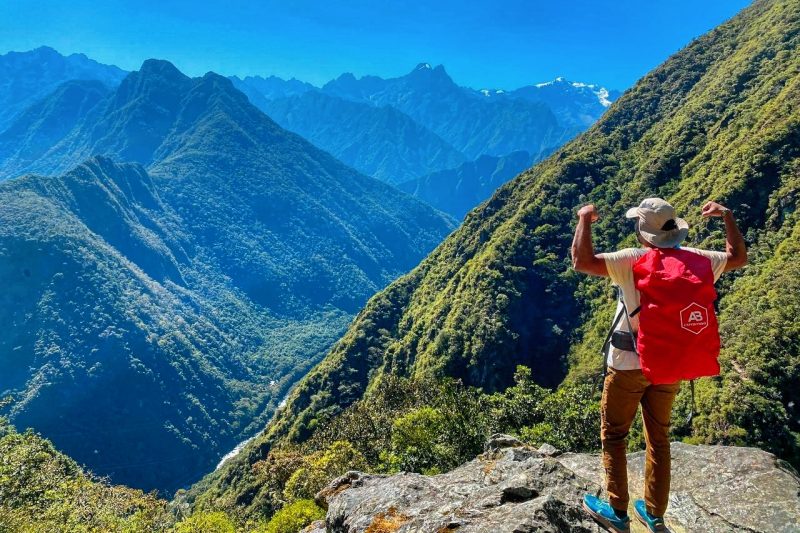
This 7-day trip is perfect for travelers who want to see the best of both worlds. It combines the breathtaking mountains of the Salkantay Trek with the historic beauty of the Classic Inca Trail. You’ll start your hike in the middle of the Andes, passing by the impressive Salkantay Glacier (6,200 m / 20,341 ft) and then going down through a lush cloud forest into a rainforest with a lot of different plants and animals. As you go, ancient Inca ruins appear out of the fog, silent witnesses to a huge empire that used to be. The trip ends with the famous sunrise arrival at Machu Picchu through the Sun Gate. This is a very rewarding and unique way to get to the Lost City of the Incas.
Overview
We at AB Expeditions believe that a great vacation begins with a great group of people. Our 7-day Inca Trail trip will be guided by experienced, knowledgeable, and enthusiastic local guides who will make the trail’s history and landscape come alive. Our porters, who are well-respected members of our staff, carefully and expertly handle all of your camping gear and personal goods. This makes it easy to hike and enjoy the sights and sounds around you. Every night, an experienced chef at camp cooks full, restaurant-quality meals using fresh, local ingredients to keep you going on your expedition and delight your taste buds. You can completely appreciate the beauty, wonder, and spirit of the Inca Trail since every aspect has been taken care of.
Highlights: Salkantay Trek 7 Days
- Peaceful Solitude at Humantay Lake: Arrive to Humantay Lake’s turquoise waters in the early afternoon, after day-trippers left, so you may quietly ponder on its holy beauty as the Salkantay Glacier towers above.
- Sunset and Stars in Pampa Japonesa (4,734 m): Camp under one of the finest night sky on Earth, just in front of the Salkantay mountain. Watch the sunset turn the peaks gold, then see the Milky Way unfurl above you.
- The highest point of the trek is Cross Incachiriaska Pass (5,028 m): Stand where Inca messengers used to stop, 5,000 meters above sea level, surrounded by snow-capped giants and wild Andean animals like viscachas and condors. This is a real high-mountain pilgrimage.
- Explore Paucarcancha. A Hidden Inca Complex: Visit this lesser-known but architecturally rich Inca site before stepping onto the official Inca Trail, learning how these structures connected an empire across mountains and valleys.
- Conquer Dead Woman’s Pass—Then Discover Runkurakay: Summit the iconic 4,200 m pass, then explore the mysterious circular ruins of Runkurakay, believed to be an Inca tambo (rest stop) with astronomical significance—often rushed or skipped by others.
- Wiñay Wayna for the night with time to take it all in: Get to this stunning Inca site in the cloud forest early so you may wash, relax, and tour its terraces and temples without the crowds. This way, Machu Picchu will seem like a natural end instead of a hectic ending.
- The Sun Gate leads to Machu Picchu at Dawn: As the first dawn unveils Machu Picchu below, walk the last stretch to Inti Punku. This is a dramatic, symbolic arrival that respects the trip you’ve completed from glacier to sanctuary.
Inca Trail Salkantay Trek 7 Days: Itinerary
Day 01: Cusco → Mollepata → Humantay Lake → Salkantaypampa
Get ready to get up early today because we’ll be picking you up about 4:00 a.m. Don’t worry, our luxurious conveyance has blankets so you may sleep a little more during the trip. We will stop at Mollepata for a short while after driving for two hours. You might choose to have breakfast there. From there, we go to Challacancha, where our walk begins.
When you get there, you’ll be able to meet our experienced cooks and riders as you check your gear one last time. Then, our journey officially starts. The first part is a moderate three-hour walk to Soraypampa, which is 3,900 meters (12,795 feet) above sea level. This is where we will spend our first night. At first, the trail goes through a mostly flat area, but then it starts to rise through a beautiful valley with glaciers. You will see a rebuilt Inca water canal along the way that is still used by farmers in the area today. This part is 7 kilometres (4.35 miles) long in all.
When we get to Soraypampa, you can relax into our exclusive Sky Camp for the night. After enjoying your first mountain lunch, you’ll have some time to relax and recharge. Later, we’ll go on a walk to the beautiful Humantay Lake, which is 4,200 meters (13,780 ft) above sea level. This round trip is around 3 kilometres (1.86 miles) long and takes about three hours. Even though it’s not very long, it’s crucial to keep a steady pace because of the high altitude. When you get to the lake, the beautiful scenery will take your breath away. The turquoise waters shining against the Humantay glacier are among of the most beautiful in the Andes. It really does feel like entering a fairy tale!
When you get back to camp, you’ll enjoy a delicious dinner and the companionship of a beautiful sunset. You can’t put into words how peaceful this spot is, but you’ll definitely feel it when you go there. When it gets dark, you will go back to your Sky Camp igloo. You will be able to sleep under the stars with a glass roof above you. You will be able to see constellations and comets and wake up to the beautiful Apu Salkantay watching over you.
Day 02: Salkantaypampa → Salkantay Pass → Pampa Japonesa
Climb into the realm of Apu Salkantay—the Inca’s sacred mountain.
We start climbing steadily toward the Salkantay Pass (4,734 m) after breakfast and coca tea. The route gives you new vistas all the time. To the left is the Humantay Glacier, and straight ahead is the Salkantay (6,271 m). It’s hard, but we go at a natural pace—no haste, just rhythm. The view from Pampa Japonesa, our highest camp, is over the whole Soray Valley. In the afternoon, we travel closer to the glacier’s edge to see Salkantay Lake. The peaks become yellow after sunset, and the night sky, which is devoid of light pollution, shows the Milky Way in stunning detail.
- Hike: 6 km | 6 or 7 hours
- Max elevation: 4,734 m
- Difficulty: Moderate to challenging
Day 03: Pampa Japonesa → Incachiriaska Pass (5,028 m) → Canal Inca
Cross the roof of the trek—where sky meets stone.
The highest point of the trip is Incachiriaska Pass (5,028 m), which is the main event of the day. The hike is tough, but you get to see snow-capped giants from all sides. At the top, you stand where Inca messengers used to stop to venerate Salkantay as a living god. There are a lot of animals to see, such viscachas, Andean deer, and if you’re fortunate, the condor. After a snack to celebrate, we go down through several habitats, from alpine tundra to cloud forest. We conclude at Canal Inca (3,853 m), where a hot lunch and a well-deserved rest are waiting for us.
- Hike: 12 km | 8 or 9 hours
- Max elevation: 5,028 m
- Difficulty: Challenging
Day 04: Canal Inca → Paucarcancha → Wayllabamba → Ayapata
Step onto the original Inca Trail—where history begins.
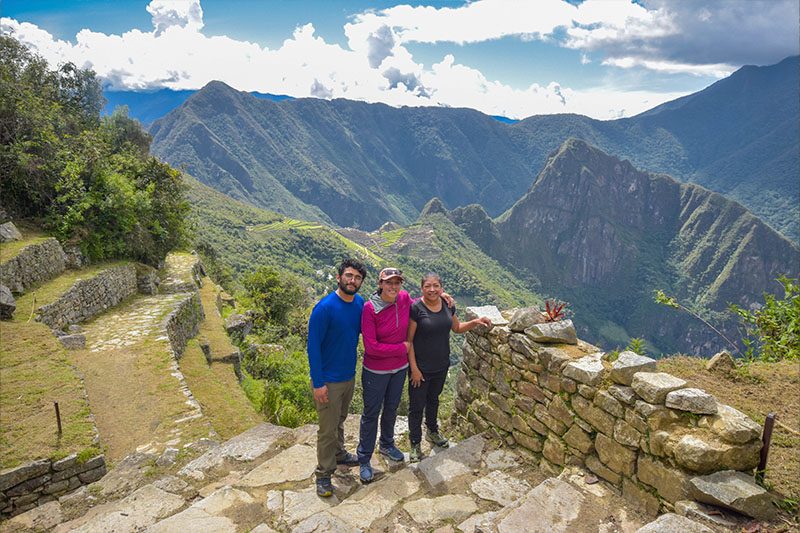
A gentle descent takes us to Paucarcancha, an impressive but rarely visited Inca complex. Here, our guides share stories of how this site served as a ceremonial stop on the Qhapaq Ñan (Inca Road System). At this point, horses are replaced by porters—a necessary and respectful step to protect the fragile Inca Trail. You’ll meet your porter team, who’ve carried gear from KM 82 with care and pride. After clearing the official checkpoint (permits and passports ready!), a short hike brings us to Ayapata, deep in the Sacred Valley’s fold.
- Hike: 11 km | 6 or 7 hours
- Camp: 3,323 m
- Difficulty: Moderate
Day 05: Ayapata → Dead Woman’s Pass → Pacaymayo → Sayacmarca → Chaquicocha
Conquer two passes, walk through time.
This is the trail’s most demanding—and rewarding—day. We rise early to tackle Dead Woman’s Pass (4,200 m), the highest point of the Classic Inca Trail. The stone steps test your legs, but the view from the top—two valleys stretching in opposite directions—makes every step worth it. After lunch in Pacaymayo, we climb again to Runkurakay Pass, pausing at the circular ruins of Runkurakay, likely an Inca tambo (waystation). The descent into cloud forest begins, and the air grows humid and fragrant. We end at Chaquicocha, a quiet camp where orchids cling to trees and mist wraps the mountains at dusk.
- Hike: 16 km | 8 or 9 hours
- Two high passes
- Difficulty: Challenging
Day 06: Chaquicocha → Phuyupatamarca → Intipata → Wiñay Wayna
Breathe. This is the trail’s gentle soul.
After five intense days, today is a gift: shorter hikes, lush scenery, and iconic ruins. We walk the “Inca Flat”—a beautifully engineered section of the trail—through moss-draped forests to Phuyupatamarca (“Town Above the Clouds”). Your guide explains its function as an astronomical and ceremonial site. Later, at Intipata, views of the Urubamba River canyon unfold below. We arrive early at Wiñay Wayna, allowing time for a warm shower (yes, we provide hot water!), rest, and an unhurried exploration of this stunning Inca complex—often missed by rushed groups.
- Hike: 9 km | 4 or 5 hours
- Camp: 2,623 m
- Difficulty: Easy to moderate
Day 07: Wiñay Wayna → Sun Gate → Machu Picchu → Return to Cusco
The moment you’ve walked for: Machu Picchu at sunrise.
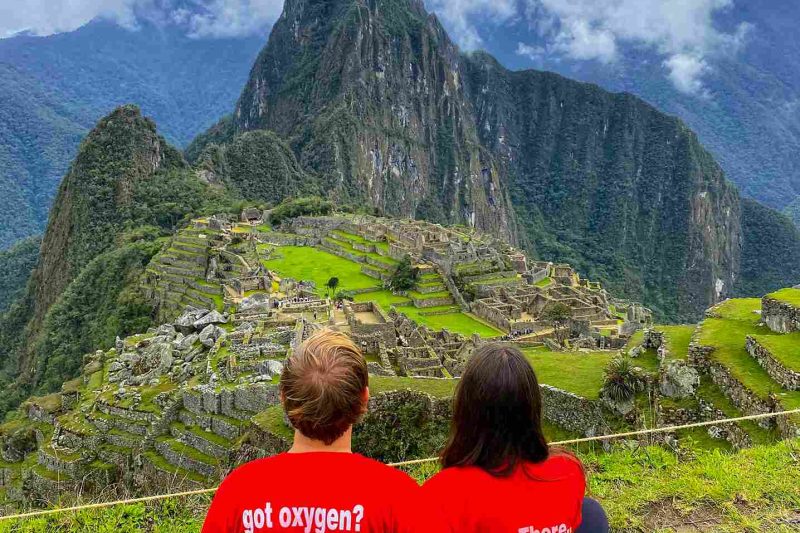
We get up before dawn to make the last ascent to Inti Punku (Sun Gate). As the sun rises, Machu Picchu comes out of the fog—silent, beautiful, and very real. After taking pictures from the iconic viewpoint, we go down to the sanctuary for a two-hour guided tour that reveals the astronomy, engineering, and spirituality that went into making this marvel. Later, we board a bus to Aguas Calientes for a celebration lunch and some free time. In the afternoon, we take the train to Ollantaytambo and then a private bus back to Cusco, where we arrive at 7:00 PM, weary, inspired, and permanently changed.
- Hike: 5 km | 3 or 4 hours
- Final elevation: 2,430 m (Machu Picchu)
- Difficulty: Moderate (short but steep start)
Included: Salkantay Trek 7 Days
1. Guide who speaks English
Your guide is more than simply a leader; they are also a local expert who knows a lot about Andean history, environment, and being safe in the high mountains. They will walk with you every day, answer your questions, and tell stories that will make the route come alive. They will not only give you information, but they will also help you feel connected to the place.
2. Radio Communication
You can’t get cell phone service outside of Cusco. That’s why your guide always has a satellite phone with them. If something goes wrong, we can quickly get in touch with medical help, park rangers, or our team in Cusco, so you’ll always be able to reach someone.
3. Oxygen tank for emergencies
Everyone reacts differently to high altitudes. Your guide has a portable oxygen tank with them in case anyone gets sick at high altitude. Your health is the most important thing.
4. A package for first aid
Your guide will have a full first aid bag with them that has everything you need for blisters, headaches, stomach problems, cuts, and symptoms that come with being at a high altitude. It’s not a big deal if there are small problems because your guide knows how to use it.
5. Drinking Water (Boiled, Filtered & Cooled Daily)
We make sure you have safe water to drink the whole time you’re on the walk. We boil and filter new water every morning, then cool it down so you can fill your bottle up to four times a day. No bottles made of plastic. No dangers. Just clean, dependable water.
6. 7 kg of your things carried for you
You only have a tiny backpack with you. Put everything else, such your clothes, sleeping bag, and toiletries, in your duffel bag (up to 7 kilograms). Our porters move stuff between camps, so you don’t have to carry it and you have a lot of energy.
7. A duffel bag is included
The day before your hike, we send you a strong duffel bag that won’t get wet. You don’t need to bring your own; just pack your 7 kg of personal items inside.
8. Hot Water for Washing Each Evening
We give you a container of hot water at each tent so you can wash your hands, face, or feet before dinner. It’s a simple thing, but after a long day of hiking, it seems like a treat.
9. Rain poncho (free)
Even in the dry season, the weather in the Andes changes frequently. We give you a light, reusable rain poncho to keep you dry when it rains out of the blue. You don’t have to buy one or worry about getting wet.
10. A two-hour guided tour of Machu Picchu
It’s only the beginning when you get to Machu Picchu. A professional guide will take you through the citadel for two hours, telling you about how the Incas built, worshipped, and lived there. You’ll leave with more than just pictures.
11. Cover for your backpack
A basic but necessary cover for your backpack against rain. It protects your phone, camera, food, and rain jacket dry when it rains suddenly or when there is a lot of dust, so your things are safe.
12. Inca Trail T-Shirt (Souvenir)
At the end of your journey, you’ll get a comfortable, nice T-shirt to remember your trip by. It’s not just a souvenir; it’s a sign of every mountain you climbed to get to Machu Picchu.
13. In Cusco, you can store your luggage for free.
While you hike, you can leave your bags, spare shoes, or city clothes at our office in Cusco. You may travel light without worrying about your things because our storage facility is locked and watched.
14. Get to and from your hotel in Cusco
On Day 1, we pick you up at your hotel in Cusco and transfer you back there on the evening of Day 7. No cabs, no problems—just a great start and end to your trip.
15. Getting tourists to the start of the trail
A nice private vehicle will drive you from Cusco to Soraypampa, where the journey begins. Along the way, there will be lovely breaks. Our driver is well familiar with the mountain roads, so he is safe and dependable, even when we leave early in the morning.
16. The team can talk to each other over radio.
Your guide, cook, and support workers are always in touch by radio. This implies that your lunch will be ready when you get there, support will come immediately if you need it, and everything will go smoothly, even in distant regions.
17. Mattresses made of foam (not air-filled)
We don’t use inflatable beds since they can lose air or deflate when it’s cold. Instead, we use thick, strong foam mattresses. You will be able to sleep well every night, even on rocky ground.
18. Chef for a Living
Not only is our chef excellent, but they also love what they do. They make all of your meals using fresh veggies, grains, and proteins, and they may change them to fit your nutritional demands without losing flavor. A lot of tourists feel that the meal is one of the best parts of the vacation.
19. Tent for the kitchen
A separate, tidy tent especially for cooking, apart from the sleeping and dining sections. This makes sure that there is always hygiene, order, and hot food, even when it’s raining or windy.
20. Tent with tables and chairs for eating
Don’t sit on pebbles or eat from your lap. We built a cozy dining tent with genuine tables and chairs so you can relax, eat, and recover after each day’s trip.
21. (The Pett), a portable toilet that breaks down in the ground
We put up a private, eco-friendly toilet tent with a real seat and a place to wash your hands at each campsite. It’s clean, private, and open all night, so you never have to walk to a public pit in the dark.
22. Service for a Full Meal (7 breakfasts, 6 lunches, 6 dinners, and 6 snacks)
You get all your meals, from your first breakfast in Soraypampa to your last evening before Machu Picchu. Fruit, energy bars, and trail mix are some of the snacks that are available throughout the middle of the morning and afternoon to keep you going.
23. Special diets are okay
Are you vegetarian, vegan, gluten-free, lactose-free, or allergic to nuts? Just let us know when you book. Our chef will make you safe, tasty meals particularly for you, with no added cost or stress.
24. Good tents (three-person tents with two people in them)
We utilize tough Eureka Timberline tents that can fit three people, but we only let two people sleep in each one. This provides you more room for your gear, makes it easier to move around, and makes you more comfortable at high altitudes.
25. Porter Service (Moral and Professional)
Our porters will carry all of your group’s gear, including tents, food, and kitchen equipment. They get a fair wage, health insurance, good clothing, and are treated like important members of our team. We observe Peru’s severe laws about the wellbeing of porters.
26. Official, Government-Issued Inca Trail Permits
We get your formal permit from Peru’s Ministry of Culture directly, with no middlemen and no risk. Your name, passport number, and other information are checked and matched exactly, so you can be sure you can get in.
27. Tickets to Machu Picchu (Circuits 1 and 3)
You can go on both Circuit 1, which gives you a postcard perspective of the area from the Guardhouse, and Circuit 3, which lets you get up close and personal with the main fortress. Right now, this is the best way to see Machu Picchu.
28. Cost to enter Humantay Lake
You don’t have to pay extra at the gate to access beautiful Humantay Lake. We plan your visit so that you can have peace and quiet apart from other people.
29. Entrance to Private Lands (Salkantay Section)
Some segments of the Salkantay path go across land that the community owns. All required costs are paid up front and are included. This is good for local families and makes sure that access is legal and polite.
30. Bus Ticket (from Machu Picchu to Aguas Calientes)
We give you a one-way bus ticket to Aguas Calientes after your guided trip. Buses come every 10 to 15 minutes, and they are speedy, safe, and free.
31. Train ticket from Aguas Calientes to Ollantaytambo
Your return trip includes a ticket for an Expedition-class train (Peru Rail) with big windows and comfy seats. We plan the 2:55 PM or 3:20 PM departure so you can eat lunch and relax.
32. Transportation back (Ollantaytambo → Cusco)
After the train, our private van will pick you up at the Ollantaytambo station (look for the AB Expeditions sign) and transport you straight to your accommodation in Cusco. You won’t have to wait or pay more.
33. Tea in your tents to wake you up
Every morning, our staff will quietly bring you a cup of hot coca or herbal tea before breakfast. It’s a pleasant way to start the day: warm hands, a calm mind, and a path ready to be explored.
34. Briefing before leaving (in Cusco, 6:00 PM)
You will meet your guide at our Cusco office the night before your walk for a 30–45 minute briefing. You will go over the plan, check your gear, ask questions, and make sure your dietary needs are met. Can’t get there at 6 PM? Just send us an email, and we’ll find a time that works.
Not Included: salkantay inca trail 7 day
- Lunch on day 7
- Sleeping Bag
- Travel Insurance
IMPORTANT INFORMATION about 7 days Salkantay Trek
The Peruvian government allows only 500 people per day on the Inca Trail—including guides, porters, and cooks. Your permit must show your full name, passport number, nationality, and age, exactly as in your passport. Once daily permits are sold out, no more bookings are possible—not even for last-minute travelers.
- Book early—especially for peak season
For May–August (dry season), secure your spot at least 8 months in advance. For other months, we strongly recommend booking 6–12 months ahead. Permits cannot be held or reserved without full payment.
- Strikes can happen—here’s our plan
Roadblocks or transport strikes occasionally occur in Peru. If one affects your departure day, we’ll take you to the trailhead the night before. If it happens on your return day, we’ll pick you up at Hidroeléctrica after a short 2-hour walk from Aguas Calientes and drive you straight to Cusco.
- Solo travelers are welcome
We’ll pair you with another solo traveler of the same gender to share a tent. If no match is available, you’ll get your own tent at no extra cost. Please message us before booking to confirm group availability.
- You must bring your original passport
Your physical passport (not a copy or digital version) is required at every checkpoint. Also bring your travel insurance card and any personal medications.
Recomendations for Salkantay 7 Trek with Inca Trail
Spend at least 3 days in Cusco before starting
This helps your body adjust to the high altitude and reduces the risk of altitude sickness. Hydrate well and avoid heavy meals or alcohol during this time.
Pack smart: duffel bag + daypack
We provide a 7 kg duffel bag (4 kg for your clothes, 3 kg for sleeping gear). Porters carry it—you only see it at camp. Keep rain gear, water, snacks, and meds in your daypack for access during hikes.
Bring camp shoes
Light sandals or slip-ons are perfect for relaxing at camp after a full day in hiking boots. Your feet will thank you!
Tipping is appreciated—but never expected
Porters, cooks, and horsemen work incredibly hard. If you’d like to tip, we suggest:
- Porters: 50–90 PEN each
- Horsemen: 50–80 PEN each
- Cook: 140–200 PEN
Give tips in Peruvian soles (PEN) on Day 4 (horsemen) and Day 6 (porters/cook). Guides can receive tips in USD or PEN after the Machu Picchu tour.
This is entirely optional.
Get travel insurance
Your Inca Trail permit is non-refundable. Good travel insurance can reimburse you if you cancel due to illness, injury, or emergency—and cover medical costs if needed.
Train your legs—and your lungs
This is a challenging 7-day hike with steep ascents, stone steps, and high passes (the highest over 5,000 m / 16,400 ft). Start walking or hiking 4–6 weeks before your trip. Stair climbing, squats, and cardio help build endurance for long days with a backpack.
Carry a reusable water bottle (1–2 liters)
We provide safe drinking water daily, but you’ll need your own bottle to refill. A wide-mouth insulated bottle keeps water cool and is easy to fill. Hydration = energy + altitude adaptation.
FAQs: Inca Trail 7 Days
Can I leave my luggage with you while I’m on the trail?
Of course! We’ll safely store your main luggage at our Cusco office (or your hotel, if that’s easier). Just bring what you need for the trek—we’ll take care of the rest.
How do I settle my remaining balance?
You can pay your balance in cash (USD, euros, or Peruvian soles) two days before your trek starts. Prefer to pay by card? We accept all major credit cards through our secure WeTravel platform (a 2.9% fee applies) or at our Cusco office (5% service fee). Just let us know your preferred method ahead of time!
Can I change my departure date after permits are purchased?
We can try—but it comes with costs. A new permit must be purchased ($100 per person), and train tickets may incur penalties. Availability on your new date must also be confirmed first. Changes aren’t guaranteed, so plan ahead!
What happens to my duffle bag on Day 7?
While most porters head back by train early in the morning, a dedicated team hikes to Aguas Calientes with your bags and stores them securely. You’ll collect them after your Machu Picchu visit, before catching your return train.
What time is my return train from Aguas Calientes?
We book return trains at 2:55 PM or 3:20 PM, arriving in Cusco around 7:30 PM. This gives you time to rest—and even join a Rainbow Mountain tour the next day if you’d like!
What’s your cancellation policy?
If Peru closes its borders, you’ll receive a full refund. For personal cancellations (illness, missed flights, strikes, etc.), $200 is non-refundable—this covers the non-refundable Inca Trail permit. We never profit from cancellations; we only recover costs we can’t undo.
What time do we arrive at Machu Picchu on Day 7?
You’ll reach the Sun Gate at 7:00 AM, then walk ~45 minutes to enter Machu Picchu by 8:00 AM—perfect timing to beat the midday crowds.
Is water provided during the trek?
Yes! We provide safe, boiled water at every meal and camp. Please bring a reusable bottle (bladder, hard bottle, or collapsible pouch)—single-use plastics are banned on the Inca Trail as of March 2022.
Is there an age limit for the trek?
There’s no official age limit, but we recommend children be at least 9 years old due to the trail’s length, elevation, and steep sections. Younger kids can find it physically and mentally taxing.
What kind of reusable water bottle should I bring?
Any type works—as long as it’s reusable! Many hikers prefer hydration bladders for convenience on the trail, while others like insulated bottles for cold water. Just avoid plastic bottles; they’re not allowed.
How can I prepare for the altitude?
Arrive in Cusco at least 2 days early. Start slow: visit museums, stroll the markets, or take a gentle city tour. On Day 2, try a short hike like Cristo Blanco or a Sacred Valley day tour to test your acclimatization. Eat light meals early on—your body will thank you.
Which Machu Picchu circuits are included?
Our 7-day trek includes Circuit 1 (Upper Terraces) and Circuit 3 (Royal Route). You’ll first take in the classic postcard view from the upper terrace, then explore temples and plazas on Circuit 3. It’s a thoughtfully paced, immersive experience.
Why do we wake up at 3:30 AM on Day 7?
It’s all about the porters. They must catch the 5:30 AM train from Km 107, and there’s only one daily departure. We hike 5 minutes to the checkpoint, wait for the gate to open at 5:30 AM, then begin our final ascent. It’s early—but it ensures your team gets home the same day.
Can I see the sunrise over Machu Picchu?
Not from the Sun Gate. The gate opens at 5:30 AM, and it takes ~1h20m to reach the Sun Gate—so you’ll arrive around 6:50 AM. Sunrise typically happens between 6:00–6:40 AM, meaning the sun is already up. Anyone promising a “sunrise view from Machu Picchu” on the Inca Trail isn’t being truthful.
Do I really need trekking poles?
If you have knee sensitivity or are new to mountain trails, yes—they’re ideal for descents. But if you’re an experienced hiker with strong joints, you may not need them. We offer quality poles for rent if you’re unsure.
If I cancel last-minute, can I still visit Machu Picchu?
Yes! We can arrange a 1- or 2-day Machu Picchu tour using parts of your original package: your Machu Picchu entry, bus ticket, and return train are still valid. You’ll just need to cover transport from Cusco to Ollantaytambo (~$30) and the train to Aguas Calientes (~$70). Hotels start at $30/night—we love Tara Machu Picchu for comfort and location.
Can we start at a lower-altitude campsite?
Yes—we’re happy to adjust! We can move your first camp to Soraypampa (lower than Salkantaypampa) to ease acclimatization. The only trade-off? An extra hour of hiking on Day 2. Request this at booking, and we’ll handle the rest.
Price for group service: $1,150 per person.
Special Offers for the five day Inca Trail:
- Students (up to 25 years old) can avail themselves of a US$40.00 discount by presenting a valid UNIVERSITY STUDENT CARD during the hike.